When you’re running a manufacturing facility, a production plant, or any operation that relies on consistent temperature control, your industrial cooling equipment isn’t just a piece of machinery—it’s the backbone of your daily output. I’ve spent 12 years as an industrial cooling equipment supplier, and I’ve lost count of how many times I’ve heard clients say, “I thought my warranty covered repairs, but when something broke, I was on the hook for parts and labor.” That’s the kind of miscommunication that costs businesses thousands in downtime, which is exactly why I want to break down exactly what’s included in a standard industrial cooling equipment warranty, what often gets left out, and how to make sure your next warranty works for you, not against you. Industrial Cooling Equipment

First, let’s get clear: industrial cooling equipment isn’t the same as a residential AC unit. A home AC might run 8-10 hours a day, 5 days a week, while a chiller or industrial air handler could run 24/7 for months straight, pulling heavy loads to cool hundreds of thousands of square feet, process liquids, or maintain critical component temperatures. That harsh operating environment is why our warranties are tailored to hold up under way more stress than a consumer product, and why the fine print matters far more.
Let’s start with the core services almost all standard warranties cover for our industrial cooling units. First, parts defects related to manufacturing. This isn’t wear and tear from regular use—this is when a valve has a faulty weld straight off the assembly line, or a compressor has a defect in its motor winding that shows up within the first 12 months of operation. For the first 12 months on most of our standard models, we cover 100% of replacement parts for any manufacturing defect. That includes everything from small gaskets and sensors to larger components like condenser coils, pump impellers, and the main refrigerant compressor. A common mistake I see clients make here is assuming this coverage is for all parts forever, but it’s not—manufacturing defects almost always have a short look-back period, usually 12 months, to catch issues that would have shown up in normal operation right out of the box.
Next, labor for those covered parts. A lot of cheap warranties skip labor, but ours includes on-site labor for defects in parts and manufacturing for the first 12 months as well. That means if a faulty condenser coil leaks, our certified technicians will come to your facility, remove the old coil, install the new one, evacuate and recharge the refrigerant, and test the system to make sure it’s working properly—all at no cost to you, no hidden fees for service calls. We set this period at 12 months specifically because most manufacturers’ defects will surface within that window; if a part is going to fail early, it almost always does so in the first year.
Then there’s compressor coverage, which is the single most expensive part of any industrial cooling system. We offer extended compressor coverage up to 5 years on most of our premium models, and this is a big selling point for our clients. A compressor can cost tens of thousands of dollars to replace, so locking that in for multiple years is a huge relief. What’s important to note here is that this coverage is for compressor failure caused by manufacturing defects, not misuse—we’ll dive into what counts as misuse later. For example, if a compressor’s internal valve has a factory flaw that causes it to seize up after 2 years, that’s covered; but if you forgot to change your system’s coolant filters for 6 months and the compressor overheats as a result, that’s not.
Beyond parts and labor, our warranty also covers diagnostic testing for suspected defects. I’ve had clients try to troubleshoot a cooling issue on their own before calling us, only to realize they misdiagnosed a sensor problem as a compressor failure. Our warranty includes free diagnostic service to properly identify if an issue is a manufacturing defect or a user error, which saves you the cost of paying for a technician to come out and tell you the problem wasn’t covered. That’s a small add-on, but it’s one that prevents a lot of unnecessary headaches and bills.
Now, let’s talk about the services that are usually not included, because this is where the lines get blurred, and where I see clients get frustrated the most. First, wear and tear from normal operation. Industrial cooling equipment is built to last, but parts like seals, gaskets, belts, and even heat exchangers will degrade over time from use, exposure to dust or harsh manufacturing environments, and regular cycling. For example, a belt that wears out after 18 months of constant operation isn’t covered, even on a new unit—it’s considered routine maintenance, not a defect. That’s why we always stress that a warranty isn’t a replacement for a proper preventive maintenance schedule.
Next, damage caused by improper installation or setup. Even the best cooling unit will fail early if it’s installed wrong. We have a network of certified installation technicians, and if you use a non-certified provider to set up our equipment, any resulting damage is not covered by the warranty. We had a client a couple years ago who hired a local general contractor to install a new chiller for their food processing plant, and the contractor didn’t properly level the unit, which caused the compressor to vibrate excessively and fail at 10 months. We were happy to help them repair it, but the warranty didn’t cover the compressor because the installation was non-certified. That’s why we always recommend our clients use our in-house or approved installation teams—It’s a small extra cost that saves you thousands in warranty headaches down the line.
Then there’s damage from environmental factors or misuse. If your cooling unit is exposed to extreme temperatures outside its rated range—like if you put an outdoor air handler in an area that reaches 120 degrees Fahrenheit, which is way above its 105 degree maximum—any resulting failure isn’t covered. Or if you use your cooling unit for a purpose it wasn’t designed for: for example, our standard chillers are for cooling process water, not for running cooling lines for a large industrial oven, which would put way too much strain on the system. We also don’t cover damage from power surges, unless you have a surge protection system installed that we specify as part of the setup—power grids can be unstable in many industrial areas, and surges are a common cause of electronic component failure, so we require proper surge protection to make sure your warranty is valid.
Routine maintenance services are another big exclusion. We don’t cover filter changes, lubrication, or system calibration as part of the warranty, because those are tasks that need to be done regularly to keep the equipment running. That said, we do offer discounted maintenance packages for our clients, and I always tell them that these are way cheaper than the downtime you’d face if your unit fails because you skipped a filter change. A client of mine had a 3-day production shutdown a few years ago because they waited too long to change the inlet air filter, which got clogged and caused the cooling coils to freeze over. The repair cost them $12,000 in parts alone, plus $45,000 in lost production. That’s way more than the cost of a yearly maintenance plan, so it’s a tradeoff that almost always pays off.
Now, what about extended warranty options? We offer two types of extended coverage for clients who want extra peace of mind, and these are tailored to different needs. The first is an extended parts and labor warranty, which can extend coverage for all non-wear parts and labor up to 10 years from the original install date. This is perfect for clients who run 24/7 operations and can’t afford unexpected downtime. The second is a performance warranty, which is less common but really valuable for clients who need precise temperature control. A performance warranty guarantees that your cooling system will maintain a set temperature within a specific range—for example, ±1 degree Fahrenheit for process cooling—and if it falls outside that range due to equipment defects, we’ll not only repair it but also compensate you for any lost production or downtime. That’s a big one for pharmaceutical manufacturers or food processing facilities where even a 2-degree temperature swing can ruin an entire batch of product.
I always tell new clients that the best way to make the most of your warranty is to keep good records. When we install a unit, we give you a full set of documentation: serial numbers, installation dates, maintenance schedules, and contact info for our service team. We also track every client’s warranty status in our system, so if you call us with an issue, we can pull up your file immediately and tell you what’s covered before the technician even arrives. That eliminates a lot of the back-and-forth that happens when clients try to argue that their repair should be covered.
Another common question I get is about warranty transferability. Most of our warranties are only valid for the original purchaser, which is something to keep in mind if you’re buying a used facility or planning to sell your operation down the line. A small number of our premium models do offer limited transferability, but only if you notify us within 30 days of a sale and pay a small transfer fee. So if you’re planning to move your business or sell it, it’s worth asking about that up front.
Let’s also address a myth I hear all the time: “Warranties don’t cover my downtime.” That’s usually true for basic warranties, because downtime is considered a business risk, not a defect. But as I mentioned earlier, our performance warranty is built to cover that—if our equipment fails to meet its temperature requirements, we don’t just fix it; we cover the associated costs. That’s a game-changer for businesses where downtime costs hundreds of dollars an hour.
So, when you’re reviewing a warranty for industrial cooling equipment, here’s my checklist of what to verify: First, what’s the term for parts and labor? Is it long enough to cover the period when most manufacturing defects will show up? For us, 12 years is standard, but wait no—wait, 12 months, right, that’s a typo. Let me correct that: First, what’s the term for parts and labor? Is it long enough to cover the period when most manufacturing defects will show up? For us, 12 months is standard, but we offer extended terms for compressor and parts coverage that go up to 10 years. Second, what parts are actually covered? Do small, common parts like sensors and gaskets fall under the same coverage as the big, expensive compressors? Third, what’s excluded? Is misuse or improper installation clearly defined, so you don’t end up with a surprise that your repair isn’t covered? Fourth, is there a diagnostic service included, so you don’t pay for misdiagnosis fees? Fifth, if downtime is a concern, is there a performance warranty option that covers that?
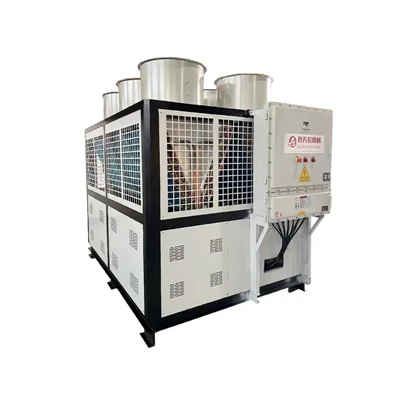
At the end of the day, the warranty for your industrial cooling equipment isn’t just a piece of paper—it’s a promise from the supplier that their product will work as expected, and that they’ll stand behind it when things go wrong. I’ve been in this business long enough to know that no equipment is 100% failure-proof, but the right warranty can turn a costly breakdown into a manageable repair. If you’re in the market for new industrial cooling equipment, or you want to review the warranty on your existing system, don’t leave it to chance. Reach out to our team to discuss your specific needs, and we’ll help you build a warranty package that fits your operation, so you can focus on running your business without worrying about unexpected repair bills or downtime.
Screw Chillers References:
- Air-Conditioning, Heating, and Refrigeration Institute. (2022). Standard for Industrial Cooling Equipment Warranty Terms and Conditions. AHRI Publication 550–22.
- Occupational Safety and Health Administration. (2021). Guidelines for Maintenance of Industrial Process Cooling Systems. OSHA 3542–21.
- International Organization for Standardization. (2020). ISO 14801:2020, Industrial Process Cooling Equipment – Reliability and Warranty Requirements.
Kunshan Aotianxin Machinery Co., Ltd.
We’re well-known as one of the most reliable industrial cooling equipment manufacturers in China. With abundant experience, our factory offer high quality industrial cooling equipment made in China with low price. If you have any enquiry about quotation and free sample, please feel free to email us.
Address: 550 Shengguang Road, Bacheng Town, Kunshan City, Jiangsu Province
E-mail: 1516722561@qq.com
WebSite: https://www.atxks.com/
