Hey everyone, if you’re a production line manager, electrical parts manufacturer, or anyone that’s ever stared at a floor full of outdated equipment thinking “this works, but I could be way more efficient,” today’s post is for you. I get this question literally every week from clients: “Can I hook a new busbar machine up to my existing production line without tearing everything apart and starting over?” And the short answer? 9 times out of 10, hell yeah, you can. But let’s get into the messy, real-world details, because it’s not just plug-and-play (even if we busbar machine suppliers wish it was sometimes). I’m gonna walk you through what you actually need to know, what stops people from pulling this off, and how we make it work for almost every client that reaches out. Busbar Machine
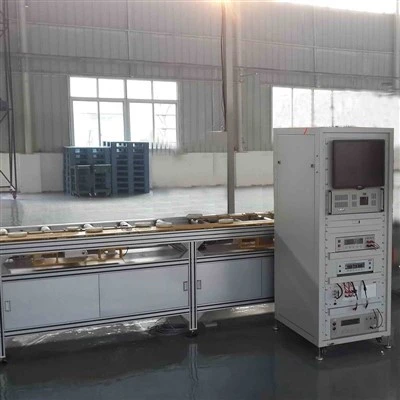
First, let’s get on the same page: what even is a busbar machine, and why would you want to add one to your line? For the uninitiated, busbars are those thick copper or aluminum bars that carry electricity in everything from switchgear and renewable energy inverters to data centers and industrial control panels. A good busbar machine cuts, punches, bends, and sometimes even plates those bars to exact spec, way faster than doing it by hand or with a bunch of separate old tools. And if you’ve got an existing production line pumping out, say, switchgear assemblies, adding a busbar machine eliminates that messy, error-prone step of cutting busbars offline and hauling them over to your assembly station. It cuts down on material waste, reduces human error, and speeds up lead times. That’s the win.
Now, back to the big question: integration. Let’s start with the most common barrier people think exists: “my line is 10 years old, it’s a hodgepodge of different brands and PLCs, there’s no way that’s compatible.” Yeah, I’ve heard that a dozen times this month alone. But here’s the thing: most modern busbar machines (the ones we build, anyway) are designed with modularity in mind, specifically for people that don’t want to rip out their entire line. PLC compatibility is the biggest hurdle, and it’s way more solvable than you’d think. For example, if your existing line runs on a Siemens S7-1200 or Allen-Bradley CompactLogix, we can pre-program our machines to talk to those exact protocols before they even leave our shop. No weird middleman software that causes glitches on your floor. Even if your line is older—like a 2005 vintage Mitsubishi system—we can add a small communication module or a gateway that translates signals between the new busbar machine and your old PLC. It’s not perfect, and it takes a little extra setup, but it’s way cheaper than replacing your entire line just for a new piece of equipment.
Material handling is another big one that people don’t always plan for, and it’s where I see most small missteps happen. Let’s say your current line has a conveyor system that brings raw metal stock to your cutting station now. You want the busbar machine to take that same stock, process it, and send it right to your assembly line. That works, but only if you plan for two things: part size and speed matching. Busbar machines process parts a lot faster than manual stations, so you can’t just hook a conveyor straight from your old cutting table to the busbar machine and expect it not to jam. We usually recommend adding a small, low-buffer conveyor or a pick-and-place robot (a collaborative one, if you don’t want to rework your entire line’s layout) that feeds parts into the busbar machine at a pace it can handle. On the flip side, once the busbar machine is done punching and bending the finished part, it needs to line up with your assembly station’s layout. If your existing line’s assembly fixtures are spaced 3 feet apart, we can adjust the busbar machine’s output conveyor to match that exact spacing, so parts drop right into place without you having to rearrange your entire workcell. I worked with a switchgear maker in Ohio last year that thought their old conveyor was too narrow for our standard machine’s output. Instead of making them buy a whole new conveyor, we built a custom side feeder that slides finished parts onto their existing belt—saved them like $15k and a week of downtime. That’s the kind of flexible design we build into every machine, because we know nobody wants to rework their whole floor for one add-on.
Another common myth: you need to shut down your entire production line for days or even weeks to integrate a new busbar machine. Nope. We do most of the programming and pre-testing at our facility before the machine even gets to your plant. Then, when it’s time to install, we usually schedule the work during your planned downtime—like a weekend shift where you only run half the line, or even a single shift where you stop a non-critical station for a few hours. Last quarter, we installed a machine for a solar inverter manufacturer in Texas that only had a 48-hour holiday shutdown to work with. Our team showed up with a pre-assembled machine, spent 8 hours running test communications with their PLC, hooked up the feed conveyor, and by the end of the second day, they were running parts on the new busbar machine while still running the rest of their line. No full shutdown, no lost revenue, just a couple of our technicians on-site to walk their crew through the setup. That’s the standard now, not the exception.
Wait, but let’s be real— it’s not always smooth sailing. There are a couple of scenarios where integration gets trickier, and it’s important to be up front about those. First, if your existing line is a total Frankenstein: 15-year-old PLC, no standardized communication, conveyor belts that don’t move at consistent speeds, and parts that are custom-sized to the point of needing a whole new feeder. But even then, it’s rarely impossible. It just means we might need to build a custom adapter or a small intermediate station to bridge the gap. Second, if you’re trying to add a fully automated busbar machine to a line that’s almost entirely manual. Like, your workers are cutting busbars with hand shears, then carrying them over to the assembly station, and you want to just drop an automated machine between those two steps. That can work too, but you’ll have to plan for how your workers will adjust—maybe retraining for an hour a day instead of pulling them off other tasks, or adding a simple manual override to the machine so they can make small adjustments if needed. I always tell clients: the worst thing you can do is not talk to us early in the process. If you reach out before you buy the machine, we don’t just sell you a piece of equipment—we look at your existing line, map out where the gaps are, and give you a realistic timeline and plan for integration. We’ll even send one of our field technicians to your plant (for free, no strings attached) to walk the floor, check your PLC, measure your conveyor, and give you a quote that includes all the custom adapters or programming you need.
A lot of people also worry about compatibility with their existing quality control processes. If your line already has a vision system that checks for bent parts or incorrect measurements, can the new busbar machine sync with that? Absolutely. Most of our modern machines come with built-in quality tracking software that can send real-time data straight to your existing QC system. So a part that passes the busbar machine’s built-in punch check automatically gets sent to your line’s QC station, and any bad parts get flagged and diverted before they even reach assembly. That’s not a extra add-on most of the time—it’s standard now, because we know clients care about data sync as much as speed.
Let’s circle back to why this matters for you, specifically. Most production line managers think adding new equipment means a huge capital outlay and months of downtime. But integrating a busbar machine into your existing line usually cuts your production time for busbar parts by 30-50%, reduces material waste by up to 20% (no more cutting bars too long or bending them wrong by hand), and frees up your workers to do higher-value tasks instead of repetitive cutting and bending. And when we do the integration right, you don’t have to replace anything you already have that works.
Here’s the thing: I’ve been selling and servicing busbar machines for 12 years, and I’ve never had a client come to me saying they regretted integrating instead of replacing their line. The biggest wins come from using what you already have and adding a tool that makes your workflow better, not breaking your whole system to fit a new tool. If you’re staring at your existing line right now, thinking “this busbar step is slowing me down,” don’t assume you have to start over.
If you’re ready to stop juggling offline busbar production and start integrating a machine that fits your line, reach out to us to talk through your specific setup. We’ll walk you through exactly what’s needed, no sales fluff, no hidden fees, just a realistic plan that works for your plant and your production goals.
Industrial Robot References:
- International Energy Agency. (2022). Busbar Manufacturing and Integration for Electrical Component Production. Global Electrical Equipment Manufacturing Report.
- Society of Manufacturing Engineers. (2021). Modular Equipment Integration for Existing Production Lines. SME Industry Practice Guide.
- Electrical Construction & Maintenance Magazine. (2023). Retrofit Automation: Adding Busbar Processing to Legacy Assembly Lines. EC&M Industry Report.
- Advanced Manufacturing Research Institute. (2022). PLC Compatibility for Industrial Automation Retrofits. AMRI Technical Bulletin.
- Solar Power World. (2023). Streamlining Inverter Production: Integrating Busbar Machines into Existing Lines. Solar Industry Trends Report.
Suzhou Kiande Electric Co., Ltd.
Suzhou Kiande Electric Co., Ltd. is one of the most professional busbar machine manufacturers and suppliers in China, also supports custom service and OEM&ODM service. Welcome to buy durable busbar machine made in China here and get quotation from our factory. Quality products and reasonable price are available.
Address: No.123, Suzhou Avenue East, Suzhou Industrial Park Suzhou, Jiangsu 215000 China
E-mail: saleswmkc@kiande.cn
WebSite: https://www.busbarcncmachine.com/
