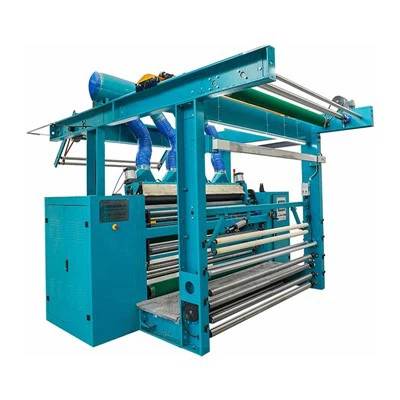
Hey there! I’m a supplier of textile raising machines, and I’m stoked to chat with you about the quality standards for these nifty pieces of equipment. As someone who’s been in the business for a while, I’ve seen firsthand how important it is to have a machine that meets the right quality benchmarks. So, let’s dive right in! Textile Raising Machine
1. Durability
First off, durability is a huge deal. A textile raising machine is gonna be used day in and day out, so it needs to be built like a tank. We’re talking about high – quality materials here. The frame should be made of thick, sturdy steel. Steel is great because it can withstand a lot of stress and pressure without warping or breaking.
For example, if the machine is constantly vibrating during operation, a flimsy frame would quickly start to show signs of wear and tear. But with a solid steel frame, it can handle all that shaking and keep on truckin’.
The moving parts are also crucial. Things like the rollers, belts, and gears need to be made from top – notch materials. Hardened steel or high – grade polymers are often used for these components. They need to be able to resist friction and wear, so they don’t break down easily. A machine with durable moving parts will have a longer lifespan and require less maintenance.
2. Precision
Precision is another key quality standard. When it comes to raising textiles, you need to be able to control the process with pinpoint accuracy. The machine should be able to adjust the height, speed, and pressure of the raising action.
Let’s say you’re working with a delicate fabric. You don’t want the machine to be too aggressive and damage the material. On the other hand, if you’re working with a thick, heavy fabric, you need enough pressure to raise the fibers properly.
The control system of the machine is what makes this precision possible. It should have easy – to – use controls that allow operators to make fine adjustments. Digital control panels are becoming more and more popular these days because they offer greater accuracy and flexibility. With a digital panel, you can set specific parameters for each job, ensuring consistent results every time.
3. Efficiency
Efficiency is a biggie in the textile industry. A good textile raising machine should be able to process a large amount of fabric in a short amount of time. This means having a high – speed operation without sacrificing quality.
One way to achieve efficiency is through a well – designed feeding system. The machine should be able to feed the fabric smoothly and continuously. If the fabric gets jammed or doesn’t feed properly, it can slow down the whole process.
Another aspect of efficiency is energy consumption. We all know that energy costs can add up, so a machine that uses less energy is a win – win. Look for machines with energy – saving features like variable – speed motors. These motors can adjust their speed based on the workload, which helps to reduce energy waste.
4. Safety
Safety is non – negotiable. A textile raising machine has a lot of moving parts, and if they’re not properly protected, it can be a serious hazard. There should be safety guards around all the dangerous areas of the machine, like the rollers and belts. These guards prevent operators from accidentally getting their hands or clothing caught in the moving parts.
The machine should also have emergency stop buttons. In case something goes wrong, an operator can quickly stop the machine to prevent an accident. Additionally, electrical components should be properly insulated to prevent electrical shocks.
5. Ease of Maintenance
No one wants to spend hours and hours maintaining a machine. A good textile raising machine should be easy to maintain. This means having accessible parts that can be easily replaced or repaired.
For example, the filters in the machine should be easy to reach and change. If the filters get clogged, it can affect the performance of the machine. And having easy – to – replace parts means that you can get the machine up and running again quickly if something breaks down.
The machine should also come with a detailed maintenance manual. This manual should provide clear instructions on how to perform routine maintenance tasks, like lubricating the moving parts and checking the electrical connections.
6. Consistency
Consistency is vital in the textile industry. Customers expect the same quality of raised fabric every time they place an order. A high – quality textile raising machine should be able to produce consistent results.
This is achieved through a combination of precision and reliability. The machine should be able to maintain the same settings and performance over a long period of time. If the machine starts to deviate from its normal operation, it can lead to inconsistent fabric quality.
7. Compatibility
A textile raising machine should be compatible with a wide range of fabrics. Different fabrics have different characteristics, such as thickness, texture, and fiber type. The machine should be able to handle all these variations without causing damage to the fabric.
For example, it should be able to raise the fibers on a cotton fabric without over – processing it, while also being able to work effectively on a synthetic fabric. Compatibility also extends to the dyes and finishes that are used on the fabric. The machine should not interfere with these processes.
8. Noise Level
Let’s face it, a noisy machine can be a real pain in the neck. In a textile factory, there are already a lot of sounds from other machines and equipment. A textile raising machine that makes a lot of noise can be a distraction for the operators and can even cause hearing problems over time.
So, a good quality machine should have a low noise level. This can be achieved through proper design and insulation. For example, the machine can be enclosed in a sound – proof cabinet, or it can have vibration – dampening materials to reduce the noise.
9. Customer Support
Last but not least, good customer support is essential. As a supplier, I know that things can go wrong with a machine, even if it’s of the highest quality. That’s why it’s important to have a team of experts who can provide quick and effective support.
Whether it’s answering questions about the machine’s operation, providing technical assistance, or helping with parts replacement, a reliable customer support team can make a big difference. When you’re considering buying a textile raising machine, make sure to ask about the supplier’s customer support services.

Well, there you have it! These are the main quality standards for a textile raising machine. If you’re in the market for a new machine, keep these standards in mind. And if you have any questions or are interested in purchasing a machine, don’t hesitate to reach out. We’re here to help you find the perfect textile raising machine for your needs.
Polish-shearing Machine References:
- Textile Machinery Handbook
- Industry reports on textile raising machine performance
Jiangsu Feng Te Technology Co., Ltd.
We’re well-known as one of the leading textile raising machine manufacturers in China. With a professional production team, we are able to meet the needs of the majority of our customers. Please rest assured to buy discount textile raising machine for sale here from our factory.
Address: No. 4 Zhanghong Road, Siying Industrial Park, Lianyungang City, Jiangsu Province, China
E-mail: frentejenny@foxmail.com
WebSite: https://www.jsfrente.net/
