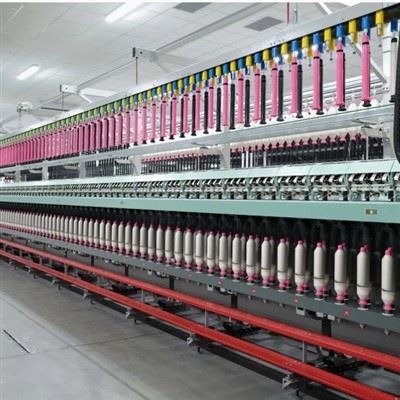
When I started working as a roving frame machine supplier more than a decade ago, I thought I had the job figured out—sell the machines, get a commission, and move on to the next order. What I quickly learned was that most of my best customers don’t buy the machine once. They come back, month after month, for spare parts. The roving frame is one of the most hardworking pieces of equipment in a spinning mill, spinning continuous, slightly twisted roving strands that feed directly into the ring frame. It runs 12 to 16 hours a day, five or six days a week, in humid, lint-heavy environments that wear parts down fast. I’ve spent thousands of hours on mill floors across the country, talking to head mechanics, shift supervisors, and mill managers, compiling a list of spare parts that almost every roving frame needs, no matter the brand or age of the machine. These aren’t the fancy, high-value parts that get replaced every few years—these are the workhorses that fail suddenly, cause hours of downtime, and make or break a mill’s weekly production targets. Roving Frame Machine
The most critical of these, without a doubt, is the front roller assembly. Roving frames have three or four rollers arranged in a line, front, middle, and back, that grip the sliver, draw it out, and deliver it to the flyer at a precise speed. The front roller is the smallest, operating at the highest speed—often 1,000 to 1,500 revolutions per minute, and it’s the most loaded. It sits directly above a bottom roller, with a small gap between them that needs to be consistent within a few thousandths of an inch. Lint, wax from the cotton, and even tiny pieces of debris get stuck in that gap, wearing grooves into the roller surface, causing uneven tension, and breaking roving strands mid-spin. I once visited a mill in North Carolina that had to shut down three lines in one week because their front rollers were grooved so badly they were producing uneven roving. The mechanic told me they’d tried grinding them down once, but that only worked for two weeks before the grooves came back. A good front roller doesn’t have to be brand new, but it has to be precision-ground, heat-treated to resist wear, and coated or polished to prevent lint from sticking. I keep at least 15 front rollers in stock at any time, because when they fail, mills can’t wait a week for a custom order—downtown costs them thousands of dollars per hour, lost production, and missed delivery deadlines for their own customers.
Right behind front rollers, in terms of how often they fail, are the aprons. These are the flat, rubber-covered belts that sit between the middle and back rollers, and they do the job of evenly distributing tension across the entire width of the sliver. Unlike rollers, which are rigid, aprons flex with every rotation, and over time, the rubber wears thin, develops cracks, or stretches just enough that they can’t maintain a consistent hold on the sliver. I’ve seen aprons split right down the middle mid-shift, turning a perfectly good run into a pile of broken roving in 10 minutes. The worst part about aprons is that they’re easy to overlook until they fail. Most mechanics check rollers every week, but they only swap aprons once a year, if that’s the standard. Mill managers often wait until production drops to a noticeable level before replacing them, which means they’re already dealing with uneven roving, higher breakage rates, and more defects in the final yarn. The best aprons for roving frames are made from a specific type of nitrile rubber, reinforced with a fabric core, and designed to resist the oils and lint common in spinning rooms. I always recommend that my customers keep two spare aprons per machine, because swapping them takes less than 15 minutes, and being prepared for a failure means no unplanned downtime.
Next on the list is the flyer and top wharve assembly. The flyer is the U-shaped metal arm that wraps around the front roller, twisting the roving and winding it onto the bobbin. It spins at an extremely high speed, often twice as fast as the front roller, and it’s under constant stress from the tension of the roving, the weight of the bobbin, and the vibration of the entire machine. The top wharve is the small pulley at the top of the flyer, connected by a belt to the main drive shaft, that makes the flyer spin. Over time, the bearings inside the wharve wear out, causing the flyer to wobble, which creates uneven twist in the roving. The flyer itself can also develop burrs or dents from occasional contact with the bobbin tube, which catch the roving and break it. I had a customer in Georgia a few years ago who noticed that every third bobbin had a twist defect. We checked all the rollers and aprons, replaced them, but the problem persisted until we took apart the flyer and found a tiny burr on one of the arms, barely visible to the naked eye. It had been catching the roving as it twisted, throwing off the tension. Flyer and wharve parts are also easy to keep in stock, and they’re not that expensive compared to the downtime they prevent. I tell customers to check the wharve bearings every three months, and replace them if they feel loose or make a grinding noise when the machine is running.
Another part that fails more often than people expect is the presser foot and roller assembly. The presser foot sits just above the front roller, holding the sliver firmly against the roller so it doesn’t slip. It’s a small, simple part, but it’s under constant pressure, and it’s exposed to a lot of lint and dust. Over time, the spring inside the presser foot weakens, so it doesn’t apply enough pressure, causing the sliver to slip on the front roller. That leads to uneven drawing, which results in roving that’s too thick or too thin in spots. I’ve also seen presser foot rollers get gummed up with wax and lint, so they don’t turn smoothly, which also causes slippage. The good news is that presser feet are cheap, easy to replace, and come in standard sizes for almost all roving frame models. I keep a box of them in every shipment I send to regular customers, because most mechanics will go through at least one or two a month, usually right before a big order deadline when the machine is running non-stop.
Let’s not forget about the drive belt and tensioner. The roving frame’s main drive belt connects the motor to the front rollers, flyers, and bobbins, so if it’s worn or loose, nothing works right. Spinning rooms run at a consistent temperature, but the constant vibration of the machines causes belts to stretch, crack, or slip. A loose belt will make the flyers spin slower than they should, resulting in less twist, and a cracked belt can snap mid-shift, bringing the entire line to a stop. The tensioner, which keeps the belt at the correct tightness, is just as important. If the tensioner spring is too weak, the belt will slip; if it’s too tight, it will wear out the belt and the pulleys faster. I always recommend that customers replace their main drive belts every six months, even if they don’t look worn, because a broken belt can cost thousands of dollars in lost production, while a replacement belt is less than $100. I also advise them to keep a spare belt and a spare tensioner on hand, because swapping a belt takes about 10 minutes, and most mills can’t afford to wait for a delivery if a belt snaps.
One part that’s often overlooked, but causes a lot of headaches when it fails, is the bobbin tube and guide assembly. The bobbin tube is what the roving is wound onto, and the guide is the small metal piece that moves the roving back and forth evenly across the bobbin so it’s wound neatly. If the guide is bent or worn, the roving will wind unevenly, causing it to spill off the bobbin during the next process, or create knots and tangles. The bobbin tube itself, which is usually made of cardboard or plastic, can warp over time, especially if it’s exposed to high humidity, so it doesn’t sit straight on the spindle, leading to uneven winding. I had a customer in South Carolina a few years ago who was having a lot of trouble with roving spilling off bobbins during transportation to the ring frame. We checked everything else, and finally found that the bobbin tubes were warped, causing the guide to move unevenly. Replacing the tubes and guides fixed the problem overnight. Bobbin tubes are disposable, so they’re something that mills go through a lot, and keeping a good supply of the right size and type is important. The guides, on the other hand, are metal, but they can bend easily if a bobbin is dropped or handled roughly, so it’s smart to keep a few spares.
Lubrication parts and filters are another category of spare parts that I see customers running low on all the time. Roving frames have hundreds of moving parts that need regular lubrication to prevent wear, from the roller bearings to the flyer wharves to the spindle shafts. If the oil or grease gets old or contaminated with lint, it can cause bearings to seize, leading to major breakdowns. The oil filters for the hydraulic system, which controls the pressure on the rollers and the movement of the flyers, also need to be changed regularly. A clogged filter can cause the pressure to drop, leading to uneven tension and bad roving. I always remind my customers to change their lubricants and filters on a consistent schedule, not just when a part starts to fail. It’s a small investment that prevents a lot of big problems. I recommend using the same type of oil and grease that I recommend with the new machines, because using the wrong type can cause build-up and wear parts faster.
Wait, there’s one more part that I can’t leave out, and that’s the break detector sensor. Most modern roving frames have these small sensors that detect when the roving breaks, so they can automatically shut off the machine on that spindle, preventing broken roving from building up. These sensors are small, easy to miss, but they fail more often than people think. Lint and dust get into the sensor housing, causing it to give false readings, so it shuts off the machine even when there’s no break, or it doesn’t detect a break at all, leading to a big pile of broken roving. I’ve seen mills lose an entire shift of production because a break detector failed and no one noticed. The good news is that these sensors are cheap, easy to clean and replace, and they come in standard sizes for most machines. I always tell my customers to keep at least two spare sensors on hand, and to clean them once a week to prevent lint build-up.
After years of working with spinning mills, I can tell you that the biggest mistake mill managers make when it comes to spare parts is waiting until something breaks to order it. When a front roller grooves or a belt snaps, you’re not just out the cost of the part—you’re out hundreds or thousands of dollars in lost production, overtime for workers trying to fix it fast, and missed delivery deadlines for your own customers. That’s why I always emphasize being proactive. Most of the parts I’ve talked about today have predictable lifespans. Front rollers last about 18 to 24 months, aprons last 12 to 15 months, drive belts last 6 months, wharve bearings last 12 months. If you plan ahead, order spare parts during planned downtime, and swap them before they fail, you avoid almost all unplanned breakdowns.
As someone who has been supplying roving frame machines and parts for over a decade, I’ve seen a lot of mills go out of business because of avoidable downtime, and I’ve seen others grow because they’re smart about maintenance and spare parts. It’s not just about selling a machine—it’s about being a partner that you can rely on when things go wrong, when you need a part at 2 a.m. because a line broke, or when you want advice on how to extend the life of your parts and reduce your costs. If you run a spinning mill, whether you have 2 machines or 50, you don’t want to be caught off guard when a critical part fails. Having the right spare parts on hand, at the right time, is one of the most important investments you can make to keep your production running smoothly.
If you’re looking for reliable, precision-made spare parts for your roving frames, or if you need advice on maintaining your machines to reduce downtime, I’m here to help. Don’t wait until a breakdown costs you thousands of dollars—reach out to discuss your needs and find the right solutions for your mill.
Textile Machinery Spare Parts References:
Textile Institute. (2020). Spinning Process and Machinery. Textile Institute Publications.
Oberg, E., Jones, F. D., Horton, H. L., & Ryffel, H. H. (2016). Machinery’s Handbook: A Reference Book for the Mechanical Engineer, Designer, Manufacturing Engineer, Draftsman, Toolmaker, and Machinist. Industrial Press.
Senthil Kumar, M. (2018). Recent Advances in Textile Machinery. Woodhead Publishing.
Shandong Hongye Machinery Co., Ltd.
Shandong Hongye Machinery Co., Ltd. is one of the most professional roving frame machine manufacturers and suppliers in China, featured by quality products and low price. Please rest assured to buy advanced roving frame machine in stock here and get quotation from our factory. Also, 1 year warranty is available.
Address: Room 1104, Building No. 2, Haier Yunjie, No. 99 Chongqing South Road, Qingdao, China
E-mail: sales@seavincn.com
WebSite: https://www.sdhymachinery.com/
