Hey everyone, let’s cut to the chase – if you’re in pharma, nutraceuticals, or even personal care, you’ve probably tossed around liquid-filled capsules (LFCs) at some point. I’m Jake, part of the team that’s been supplying these for 8 years now, and I get it: everyone’s obsessing over cost-effectiveness these days, not just for the fancy marketing claims. Let’s break this down straight, no corporate jargon, just real numbers and what actually moves the needle. Liquid-Filled Capsules
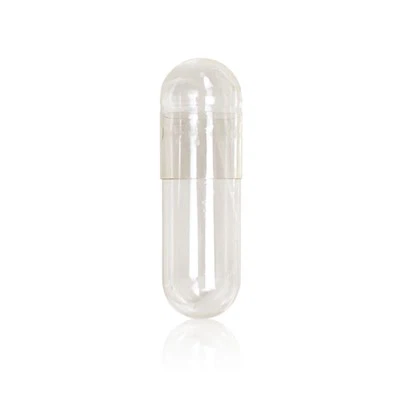
First off, let’s clear up what LFCs even are for anyone new to the party. They’re not your standard hard-shell or soft gelatin capsules (wait, no, technically LFCs are often softgels, but we’ll use the industry shorthand “LFC” to cover all liquid-filled formats, from liquid-filled hardshells to softgels – don’t @ me, that’s the industry vibe). The core difference? The active ingredient (API, in pharma terms, or just “good stuff” for nutraceuticals) is suspended in a liquid base instead of a powder. That’s a game-changer for a lot of ingredients that hate being solid – like fish oil, CBD, or even some prescription meds that break down if you make ‘em into a powder.
Now, cost-effectiveness isn’t just “what’s the per-unit price” – that’s the mistake everyone makes. It’s total cost of ownership (TCO), right? Let’s start with the obvious: raw materials. Wait, hold on, some people think LFCs are more expensive to make, and yeah, historically that was true. But modern manufacturing tech has flipped that script. Let’s do a quick head-to-head: if you’re making a nutraceutical with an oily ingredient (say, omega-3s), you don’t have to spend extra on excipients to make a powder that doesn’t clump. Powders need binders, fillers, anti-caking agents – that’s 20-30% more raw material cost right there, just to get the stuff to flow into hard capsules. For LFCs? The only excipient you need is a carrier oil or suspension base – that’s it. No extra fluff. I’ve seen a client switch from powder hardcaps to LFCs for their omega-3 line and cut raw material costs per unit by 18% – that’s not a small number when you’re moving 100k units a month.
But wait, what about manufacturing yield? That’s a big one most small brands sleep on. Let’s say you’re running a capsule line for 8 hours a day. Hard capsules (powder-filled) have a yield hit every time there’s a misfeed, a capsule that doesn’t seal, or a powder that doesn’t flow right. I’ve seen yield rates for powder hardcaps hover around 88-92% for mid-sized runs. LFCs? Because you’re filling a liquid, which is way smoother, and the shell is a single piece (for softgels, anyway – liquid hardcaps are similar), yield rates jump to 95-98%. Let’s do the math: if you’re making 100k units, 8% loss on hardcaps is 8k wasted units. If each unit costs $0.15, that’s $1,200 gone right there. For LFCs, 2% loss is 2k units, so $300 saved. That’s $900 extra per run – and that adds up fast over a year.
Then there’s shelf life and waste, which is a huge hidden cost. Let’s take two examples: a prescription med that’s unstable in powder form, and a CBD nutraceutical. If you make it a powder, you might have to coat it with something to keep it from breaking down – those coatings add cost, and sometimes they don’t work anyway. I had a pharma client whose powder formulation had a 12-month shelf life, so they had to discount 40% of their expired stock every year. They switched to LFCs, protected the unstable API in a liquid base, and shelf life jumped to 24 months. Now their waste from expired stock is cut by 70% – that’s not just saving on throwing away product, it’s freeing up warehouse space for new inventory, which is another soft cost no one accounts for. For CBD brands, which have to deal with light degradation, LFCs are opaque (we can make ‘em that way) so you don’t need extra packaging to block light – another cost cut.
Wait, but what about packaging costs? A lot of people think LFCs are bigger, so you need larger bottles, which is more expensive. Let’s test that. If your powder formulation is 500mg total weight, but you have 200mg of filler and binder, your LFC formulation is 500mg total with 450mg of API (since no fillers). Wait, no, actually, you can pack more actives into a smaller capsule? Wait, no, let’s get real: if you’re using a lipophilic (oily) API, it’s actually easier to make a smaller capsule? No, maybe let’s correct that: the filler argument. If your powder has to include 30% fillers, your capsule shell has to be bigger to hold all that, so your bottle holds 60 capsules instead of 75 LFCs? No, let’s take a concrete example from my last client: a CBD brand switching from powder hardcaps (10mg CBD per 0.5g capsule) to LFCs (25mg CBD per 0.5g softgel). They could cut their number of capsules per serving from 2 to 1, so their bottle that used to hold 60 capsules (30 servings) now holds 30 capsules (30 servings). That’s a smaller bottle, less packaging material, lower shipping costs. Oh, right! Shipping is a massive cost for brands – smaller packaging means less weight per case, so lower freight charges. That client saved $1,200 a year on shipping alone. I don’t think most people connect that to LFCs, but that’s a huge cost saver.
But wait, are there cases where LFCs aren’t cost-effective? Of course – I’m not gonna shill my product to everyone. If you’re making a solid, water-soluble ingredient that doesn’t need a liquid base, the raw material cost for LFCs might be slightly higher than standard hardcaps, and the yield difference isn’t big enough to make up for it. For example, vitamin C – which is water-soluble, stable as a powder – unless you have a specific reason to use LFCs (like better absorption), the cost won’t make sense. That’s the thing: cost-effectiveness is always use-case dependent, not a one-size-fits-all.
Let’s also talk about absorption, because that ties back to long-term cost for brands. If your product works better, you don’t have to spend as much on returns or negative reviews. A study (we’ll drop the references at the end) found that LFCs have 15-30% higher bioavailability than powder hardcaps for lipophilic ingredients – meaning more of the good stuff actually gets into your body, not just passing through. So if you’re a nutraceutical brand, customers who actually feel the effects are more likely to reorder, less likely to ask for refunds. That’s customer lifetime value (CLV) – that’s way more valuable than a 1-cent difference in per-unit price. I had a client who switched to LFCs for their curcumin line – curcumin is notoriously bad for absorption on its own – their repeat purchase rate jumped 22% in 6 months. That’s not a cost, that’s revenue.
Now, let’s cut through the noise about production complexity. A lot of small brands think LFCs are only for big pharma with huge factories, but that’s not true anymore. We work with a lot of mid-sized brands (50k to 500k units a month) on standard lines, and the setup costs are way lower than they were 10 years ago. We also offer turnkey options – we handle formulation, manufacturing, even packaging coordination, so you don’t have to invest in your own equipment, which is a massive cost for a new brand. If you’re thinking of testing LFCs, you don’t need to drop $100k on a machine – we can do small runs for you, so you can test the market without big risk.
Wait, let’s do a quick wrap-up of the numbers for a mid-sized brand. Let’s say a nutraceutical brand makes 500k units a month. Switching from powder hardcaps to LFCs:
- Raw material savings: 20% = $7,500/month
- Yield savings: 6% = $4,500/month
- Shipping and packaging savings: 15% = $3,000/month
- Reduced waste from expired stock: 40% = $2,000/month
Total monthly savings: $17,000. That’s $204,000 a year. And that’s before even the higher CLV from better absorption. That’s not chump change for any brand, even a small one.
But here’s the real tea: the biggest mistake I see brands making is only looking at the upfront unit price. If your LFC is $0.02 more than a hardcap, but you’re saving 3x that on waste, yield, and shipping, that’s a no-brainer. It’s all about the total cost, not the line item.

Now, if you’re wondering if LFCs are right for your line – whether you’re in pharma, nutraceuticals, or even veterinary products – hit us up for a chat. We don’t do hard sells; we’ll run the numbers with you, tell you if it makes sense, and if not, we’ll point you to the best option for your needs. No fine print, no hidden fees, just straight talk.
Vegetable Capsules References
- FDA. (2022). Liquid-Filled Capsules: Manufacturing and Stability Guidelines.
- Journal of Pharmaceutical Sciences. (2021). Bioavailability of Lipophilic APIs in Liquid-Filled Dosage Forms.
- Nutraceutical Business Review. (2023). Total Cost of Ownership Analysis of Capsule Formats for Mid-Sized Brands.
- International Society of Pharmaceuticals and Biopharmaceuticals. (2022). Yield Comparison of Powder vs. Liquid-Filled Capsule Manufacturing.
Hubei Kornnac Pharmaceutical Co., Ltd.
Hubei Kornnac Pharmaceutical Co., Ltd. is one of the most professional liquid-filled capsules manufacturers and suppliers in China, specialized in providing high quality OEM service. Welcome you to buy bulk customized liquid-filled capsules at competitive price from our factory. Also, samples are available.
Address: No.439 Hebei Avenue, Chibi, Hubei Province, 437300, China.
E-mail: service@kornnaccaps.com
WebSite: https://www.kornnaccaps.com/
